
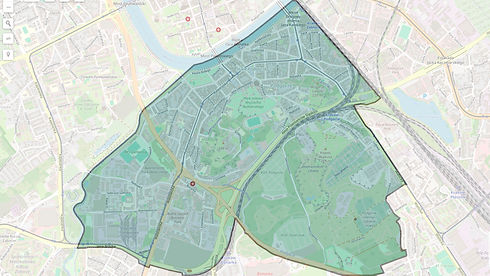
Stare Podgórze
Want to find properties in this area?
General information

Stare Podgórze, located on the southern bank of the Vistula River in Kraków, is a historic district marked by resilience, quiet charm, and deep historical layers. Once an independent city founded by the Austrians in 1784, it retains a distinct identity with its own central square, Rynek Podgórski, anchored by the striking neo-Gothic St. Joseph’s Church.
The district holds a significant place in World War II history. During the Nazi occupation, it became the site of the Kraków Jewish Ghetto, with the haunting Ghetto Heroes Square and nearby Schindler’s Factory Museum serving as powerful memorials. The Liban Quarry, used as a forced labor camp, remains a quiet, overgrown witness to this dark past.
Despite its tragic history, Stare Podgórze has undergone a revival. Today, it’s filled with cafés, art spaces, and scenic riverfront paths. The Father Bernatek Footbridge connects it to Kazimierz, symbolizing its blend of old and new.
Calmer than the city centre, Stare Podgórze invites reflection, discovery, and a deeper understanding of Kraków’s soul.
Architecture
The architecture of Stare Podgórze reflects its layered history, blending Austro-Hungarian elegance, industrial grit, and modern renewal. At its center, Rynek Podgórski features orderly 19th-century townhouses in neoclassical and early modernist styles. Towering above is St. Joseph’s Church, a striking neo-Gothic landmark with dramatic brickwork and spires.
Throughout the district, industrial-era buildings, factories and warehouses from the late 1800s hint at Podgórze’s working-class roots. Some remain in decay, while others have been converted into galleries, cafés, and lofts. Post-war communist blocks add a stark, utilitarian layer to the landscape.
Today, modern architecture is emerging, especially along the river and in nearby Zabłocie, where glass-and-steel constructions mingle with the old. Altogether, Podgórze’s architecture captures the district’s transformation from imperial suburb to a vibrant, evolving part of contemporary Kraków.

Green Areas

Stare Podgórze offers a surprising wealth of green spaces that soften its urban landscape and invite quiet exploration. The most prominent are Park Bednarskiego and Krakus Mound (Kopiec Krakusa), a prehistoric earthwork set atop a grassy hill, surrounded by open meadows and offering sweeping views of Kraków. It’s a favorite spot for picnics, sunsets, and local traditions.
Nearby lies the Liban Quarry, an eerie, overgrown former limestone quarry and WWII labor camp. Though technically not a formal park, it’s become a wild green enclave part ruin, part nature reserve filled with birdsong, trees, and scattered remnants of its past.
The Vistula River boulevards form another key green artery, with walking and cycling paths lined with trees, benches, and views across to Wawel Hill and Kazimierz. These riverside paths are popular with joggers, families, and anyone seeking a peaceful escape.
Scattered pocket parks and tree-lined streets, especially around Rynek Podgórski, add to the district’s livability. While not as manicured as some city parks, the green areas in Podgórze feel organic and rooted blending history, nature, and everyday life in a quiet, understated way.
Transport
Stare Podgórze is well connected to the rest of Kraków, with several tram and bus lines running through the district. Stops like Korona, Limanowskiego, and Plac Bohaterów Getta offer quick, direct access to the Old Town and other central areas, usually in under 10 minutes.
The Father Bernatek Footbridge links Podgórze to Kazimierz, making it easily walkable and bike-friendly. Scenic riverside paths also provide great routes for pedestrians and cyclists.
For regional travel, Kraków Zabłocie train station is just nearby, with connections to the main station and beyond. Overall, Podgórze is both accessible and easy to navigate, whether by tram, foot, or bike.
_edited.jpg)
Local amenities

Stare Podgórze offers a well-rounded mix of local amenities that cater to both residents and visitors. The area features grocery stores, pharmacies, bakeries, and small shops, particularly around Rynek Podgórski and main streets like Kalwaryjska and Limanowskiego. These provide convenient access to everyday essentials without the crowds of more central districts.
The neighborhood has a growing number of cafés, restaurants, and bars, ranging from traditional Polish eateries to modern bistros and coffee roasters. You'll also find art galleries, boutique stores, and co-working spaces, especially in revitalized post-industrial buildings.
Families benefit from schools, playgrounds, and green spaces, while healthcare needs are met by local clinics and medical centers. Cultural venues like the nearby MOCAK and Schindler’s Factory add to the district’s appeal.
Stare Podgórze combines the feel of a self-sufficient local neighborhood with the energy of a creative, evolving part of the city.
Resident's view
Living in Stare Podgórze is like having the best seat in the house to Kraków’s past and future. I love starting my day with a chill walk by the river or grabbing a coffee at this cozy café near Rynek Podgórski. The vibe here is super calm, almost village-like, the streets are peaceful, and I always run into familiar faces at the bakery or on the tram.
It’s close enough to the main square and I can get there in no time, but coming back here always feels like a little escape. I really dig the mix of old and new, you’ve got these cool old buildings, some with a bit of history on them, next to renovated factories turned into galleries and hangout spots.
On weekends, I’ll either hike up Krakus Mound for the views or check out the green spaces and art spots around Zabłocie. There’s always something going on, but it never feels too crowded or hectic. Living here is like being part of a community that really respects its history but is also slowly changing for the better and I can feel that every day.
Return to Area Guides